

Get Your Free Estimate Now
"*" indicates required fields









When planning a home relocation in Ontario, many homeowners ask: Is one truck enough for the move?
At first glance, two homes with the same number of bedrooms may seem likely to need the same truck.
In reality, truck space depends less on bedroom count and more on the total inventory, storage areas, item shape, access conditions, and loading requirements.
A lightly furnished 4-bedroom home may fit in one 26-foot moving truck, while another home with the same number of bedrooms may require more space due to extra storage, outdoor inventory, specialty equipment, oversized pieces, or items that require controlled placement.
That difference can affect truck size, timing, labour, and delivery coordination.
In this guide, we’ll explain how movers assess truck capacity, why similar homes may require different truck plans, and which details to share before requesting a written estimate.
Quick Answer
One 26-foot truck may be enough for many 3-bedroom condos, townhouses, and moderately furnished semi-detached homes in Ontario. It may not be enough if the move includes a finished basement, full garage, shed, patio furniture, gym equipment, extra appliances, oversized furniture, or fragile items that require separate placement.
Verified by:
Mr. Kamaldeep Singh, Operations Manager, Professional Movers Canada
Reviewed for truck-space planning, loading order, access conditions, and residential move estimate preparation across Ontario.
Last reviewed: June 2026
How Movers Decide Whether One Truck Is Enough for a 3-Bedroom Move in Ontario
Movers usually start by reviewing your physical inventory.
A 3-bedroom count gives a rough starting point, but it does not show what is actually inside the home.
A proper truck estimate usually reviews:
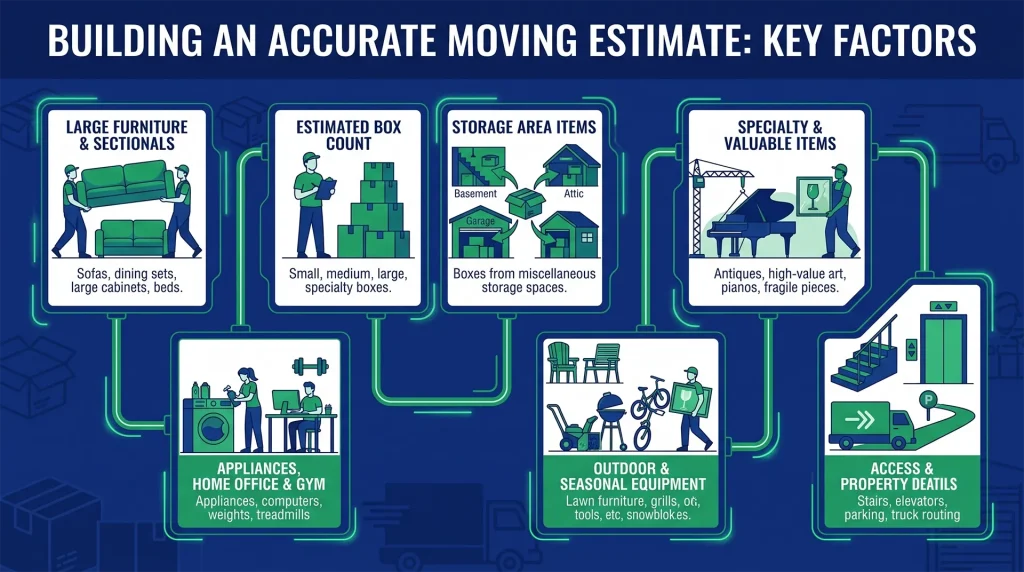
This breakdown matters because a moving truck is not loaded like an empty room.
Crews need to build a safe loading order. Heavy items usually sit low. Fragile pieces need protection. Some items, such as lawnmowers, bicycles, large mirrors, or patio pieces, can take up extra floor space because they cannot always be stacked.
That is why a reliable written estimate should be based on a room-by-room inventory review, not just a bedroom count.
Clear photos or a short video walkthrough can also help the moving team confirm truck size, loading time, and property access before moving day.
Mover’s Estimate Note: Do not rely only on bedroom count when requesting a truck estimate. A mover should ask about storage areas, outdoor inventory, oversized pieces, access conditions, and truck placement before confirming whether one truck is enough.
Not Sure If One Truck Is Enough?
Send your room list, storage details, photos, or a short video walkthrough. We can review the inventory and help confirm whether one truck, two trucks, or a shuttle setup is appropriate.
What a 26-Foot Moving Truck Can Accommodate
A 26-foot moving truck for a house move is commonly used for mid- to large-sized residential relocations in Ontario.
Many commercial 26-foot trucks offer about 1,400 to 1,600 cubic feet of loading space, but that number is only a planning range.
Usable space depends on the truck model, item weight, furniture shape, and loading order.
A 26-foot truck is often suitable for:
The key factor is usable volume. A 26-foot cargo box can look large when empty. Space changes quickly once movers start loading large furniture, boxes, appliances, storage items, and outdoor pieces.
Straight-edged boxes and modular furniture load more efficiently.
Bulky, curved, fragile, heavy, or non-stackable items reduce usable truck space because movers cannot safely pile everything to the ceiling.
That is why 26-foot truck capacity should be treated as a flexible planning range rather than a fixed guarantee.
The final fit depends on the real shape, weight, and volume of the household inventory being moved.
Truck-Size Note: A 26-foot moving truck is often listed around 1,400 to 1,600 cubic feet, but usable space changes by truck model, payload limits, wheel wells, loading order, furniture shape, and safety requirements. Treat this as a planning range, not a guarantee.
Why Bedroom Counts Mislead Homeowners Planning a 3-Bedroom Move
Bedroom count is useful, but it cannot confirm moving truck space for a 3-bedroom home.
Scenario A: Light 3-Bedroom Townhouse or Condo
This home has standard beds, one sofa, a dining set, basic dressers, a TV unit, and a predictable number of boxes.
Storage is limited. Most furniture can be disassembled, stacked, or loaded in a clean, orderly manner. This type of move may fit into one 26-foot moving truck when access is simple, and the box count is manageable.
Scenario B: Full 3-Bedroom Detached Family Home
This home has the same number of bedrooms, but the inventory is very different.
It includes a finished basement, garage shelving, storage bins, patio furniture, an extra freezer, home gym equipment, and a large sectional.
This type of move can require more truck space because many items are bulky, heavy, awkward, or difficult to stack.
The real difference is not the room count. It is the total shipment size.
A room count shows the layout. The itemized inventory shows the truck plan.
That is why movers ask about storage areas, outdoor items, and specialty furniture before confirming truck size.
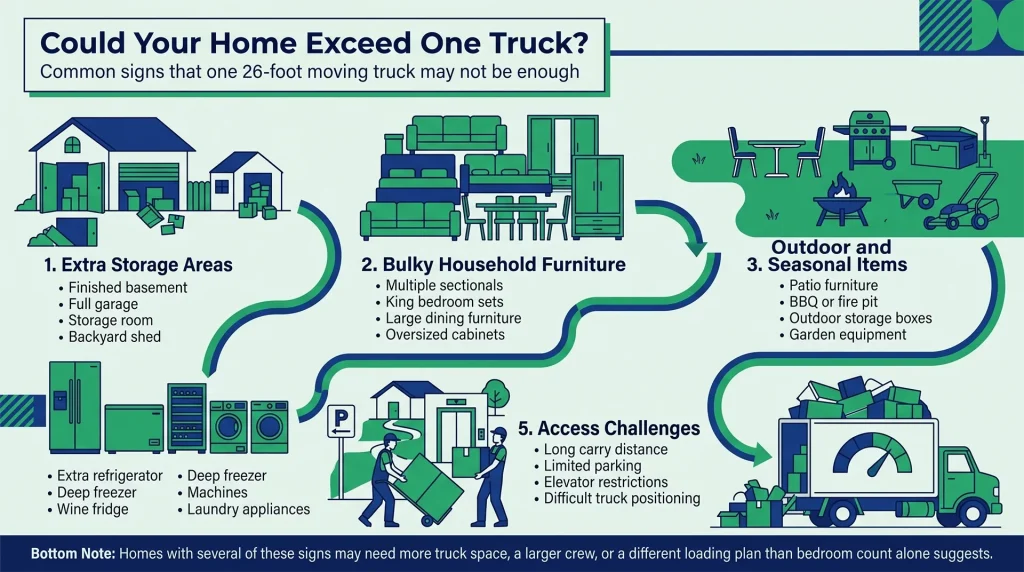
Ontario Move Examples: When One Truck May or May Not Be Enough
Ottawa Townhouse
A 3-bedroom townhouse with standard furniture, limited storage, a manageable box count, and direct driveway access may fit into one 26-foot moving truck.
GTA Detached Home
A 3-bedroom detached home with extra storage areas, garage inventory, outdoor items, and specialty equipment may require more truck space.
Toronto Condo Access Issue
A condo move may fit in one truck, but tight loading-dock access, limited elevator time, or poor truck parking can still require a shuttle vehicle or revised loading plan.
Hidden Inventory Areas That Fill a Moving Truck Faster
Most homeowners remember the main furniture: sofas, beds, dressers, and dining sets.
The bigger truck-space surprises usually come from areas outside the main rooms.
Storage areas, outdoor spaces, and specialty pieces often contain bulky or awkward items that do not stack cleanly inside a truck.
Basement Storage
Basements in Ontario family homes often add more volume than expected.
Plastic bins, holiday décor, seasonal clothing, fitness equipment, spare furniture, toys, old electronics, and stored boxes can quickly increase the load.
Many basement items are difficult to stack because they are loose, fragile, heavy, or irregularly shaped.
Garage, Workshop, and Shed Items
Garages and sheds are among the most common reasons a residential move outgrows one truck.
Tool chests, workbenches, tires, bicycles, ladders, lawn mowers, snow blowers, garden tools, and sports equipment can take up a large amount of floor space.
These items are often heavy, sharp-edged, dirty, or awkward. Some may need to be loaded separately instead of stacked above household furniture.
Items You May Not Want to Move
Older furniture, broken shelving, unused appliances, worn outdoor items, scrap materials, and loose storage pieces can still affect the moving plan if they are not sorted early.
Before requesting a truck estimate, decide what should be moved, donated, disposed of, or handled separately through junk removal.
Sorting these items before the estimate helps movers review the actual shipment size rather than planning truck space for items that may not go.
Patio and Outdoor Items
Outdoor items can be deceptively bulky.
Patio tables, non-folding chairs, umbrellas, BBQs, planters, fire pits, outdoor storage boxes, and children’s play equipment can quickly use up truck space.
Many patio pieces are rigid, weathered, or hard to nest together, which makes them less efficient to load than standard indoor furniture.
Specialty and High-Value Items
Some items need dedicated placement inside the truck.
Pianos, treadmills, oversized mirrors, glass display cabinets, safes, antique furniture, artwork, and high-value electronics often need more protection and more controlled loading space.
These items are not always the largest part of the move. The issue is how they must be positioned, protected, and secured.
When One 26-Foot Moving Truck May Be Enough
One 26-foot moving truck may be enough when the inventory is predictable, and the loading conditions are clear.
This is more likely when the move includes:
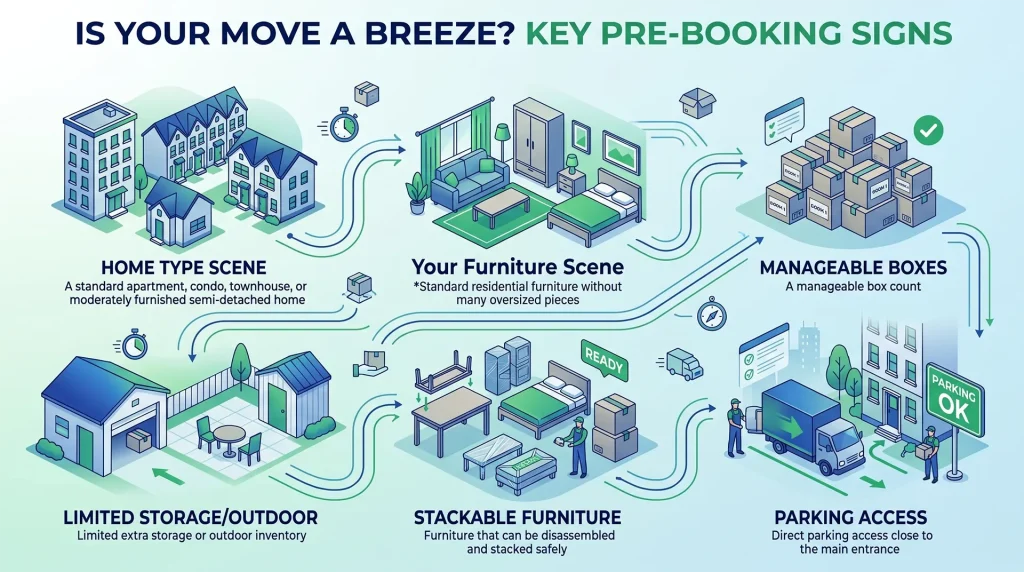
In this type of move, the crew can usually load the truck in a controlled order without losing space to bulky, awkward, or non-stackable items.
The final truck plan should still be confirmed with an inventory review before moving day.
When a Second Truck or Different Moving Plan May Be Needed
A second truck or different moving plan may be needed when the inventory is too large, too heavy, or too awkward for one 26-foot moving truck.
This is more likely when the move includes:
- Years of stored household items
- Large storage-heavy areas or outdoor inventory
- Multiple workstations, gym equipment, or specialty pieces
- Large safes, workshop tools, or oversized appliances
- Fragile or high-value items that need controlled placement
A second truck can increase the estimate because it may add vehicle space, labour, fuel, and loading time.
But underestimating truck space can create bigger problems on moving day.
If the original truck is too small, the crew may need an extra trip, another vehicle, or a revised delivery plan.
For long-distance moves, overflow can also affect delivery timing because the truck may not return the same day for a second trip.
Truck Planning Tip: A second truck is not always an upsell. For larger moves, it can prevent overflow, rushed loading, poor item placement, and delivery delays.
When Access Changes the Truck Plan
A truck can have enough space inside, but still be the wrong setup if it cannot park close to the property.
Access matters because the crew needs a safe, workable path between the home and the truck. If that path is too long, blocked, restricted, or unsafe, the moving plan may need to change.
This can happen with:
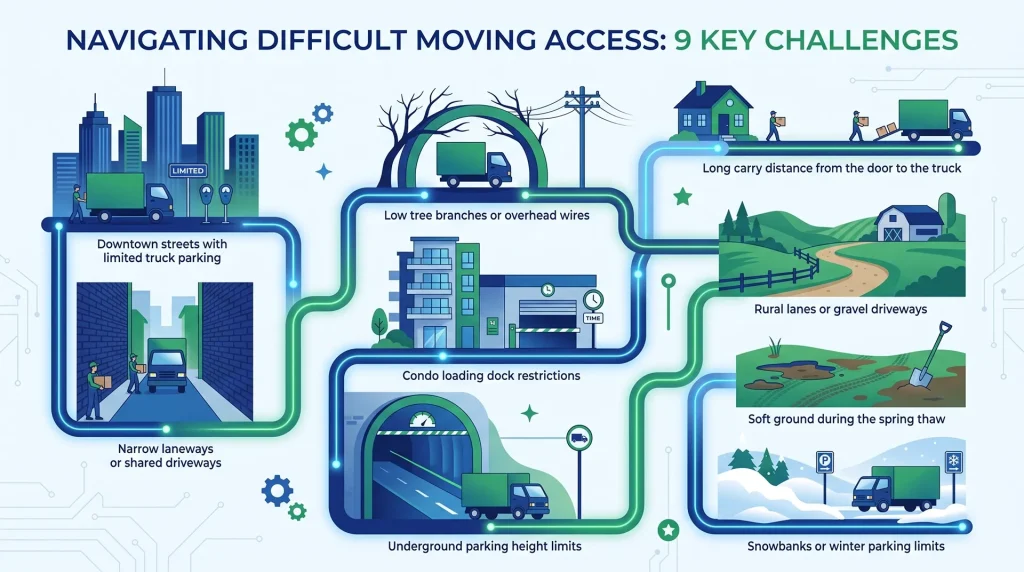
When the truck cannot park close enough, the problem is no longer truck capacity. The problem becomes safe and efficient access for loading.
Movers may recommend a shuttle vehicle moving service when a large truck cannot park safely or close enough to the entrance.
A smaller vehicle carries items between the home, condo loading area, or driveway and the main moving truck parked nearby.
The shuttle setup helps reduce long carry time, keeps loading more organized, and avoids forcing a large truck into a space that does not fit the property.
Access should be reviewed before moving day. Driveway limits, condo rules, parking restrictions, long carry distance, and seasonal conditions can affect timing and truck setup.
Why This Matters for Your Move: A large truck is not always the best vehicle to place directly at the door. When parking, clearance, or driveway access is tight, staging the larger truck nearby and using a smaller shuttle vehicle can keep loading safer, more organized, and easier to manage.
The Hidden Risks of Overpacking One Moving Truck
Trying to force too much inventory into one truck can create avoidable problems.
A moving truck needs a controlled loading order. Heavy items usually sit low. Fragile items need a protected space.
Large pieces often need to be positioned so they can be secured and unloaded without blocking the rest of the truck.
When the truck is packed beyond its realistic capacity, the crew has less control over that order.
Item Protection Becomes Harder
Fragile pieces, electronics, mirrors, artwork, glass cabinets, and delicate furniture need space for padding and separation. If the truck is too full, safe placement options become limited.
Loading Order Can Break Down
A good load plan is built in sections. If space runs out near the end, items may need to be shifted, double-handled, or placed in less efficient positions.
Overflow Can Affect Timing
If the final items do not fit, the mover may need another vehicle, an extra trip, or a revised delivery plan. This can affect timing and delivery coordination.
The better plan is to confirm the inventory before moving day so the truck setup, loading order, and delivery plan are clear before the crew arrives.
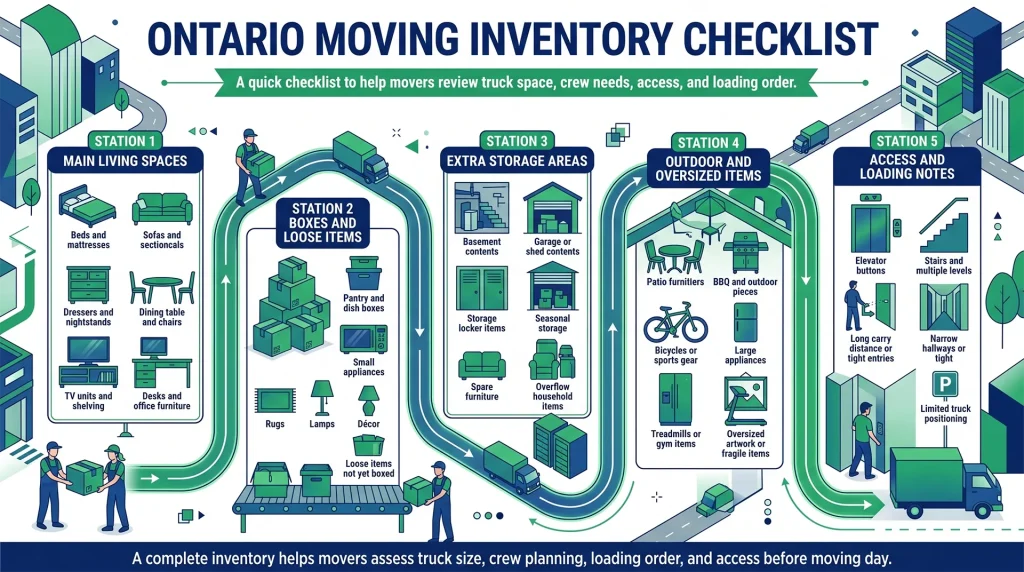
Why Photos and Video Walkthroughs Improve Truck Planning
An inventory checklist is useful, but photos and video walkthroughs show details a written list may miss.
A short walkthrough can reveal oversized furniture, basement storage, garage items, patio inventory, narrow stairs, long carry distance, and parking limits.
This helps movers review truck space, access, loading time, and the right vehicle setup before moving day.
Final Verdict: Is One Truck Enough for Your 3-Bedroom Move in Ontario?
For many 3-bedroom condos, townhouses, and moderately furnished semi-detached homes, one 26-foot moving truck may be enough.
That changes when the home has extra storage areas, outdoor inventory, specialty equipment, oversized pieces, or fragile items that need separate placement.
The bedroom count is only a starting point. The real truck plan depends on inventory volume, item shape, loading order, access conditions, and truck placement.
Before booking, request an inventory-based estimate. Share a room-by-room list, photos, or a short video walkthrough so truck size, crew needs, access, and timing can be assessed before moving day.
That gives you a clearer answer on whether one truck is realistic or whether another truck setup should be reviewed.
FAQs About 26-Foot Trucks and Ontario Moving Loads
Is one 26-foot truck enough for a 3-bedroom move in Ontario?
Often, yes. A moderately furnished 3-bedroom condo, townhouse, or semi-detached home may fit into one 26-foot truck. Extra storage areas, outdoor inventory, specialty equipment, oversized furniture, or fragile items can increase truck-space needs.
Can a 26-foot truck fit a 4-bedroom house in Ontario?
Sometimes, but only when the home is lightly furnished and has limited extra storage, outdoor inventory, and oversized furniture. A full 4-bedroom family home may need more truck space or a second truck.
What items usually make a move need a second truck?
Storage-heavy areas, outdoor inventory, large furniture, gym equipment, extra appliances, and specialty items can quickly use available truck space. The issue is not only size, but how safely those items can be stacked and loaded.
What is a shuttle vehicle in a moving plan?
A shuttle vehicle is a smaller truck or van used when the main moving truck cannot park close to the home, condo loading area, or driveway. It carries items between the property and the larger moving truck parked nearby.

Testimonials

Hardworking, focussed and polite. What surprised me was their care and attention detail, almost as if they were moving their own possessions. Thank you for your incredible service.
Contact Us

How It Works
Quality Services and
the Highest Level of Professionalism

Contact our team
Reach out to Professional Movers Ottawa via phone or e-mail


Get a free estimate
Consult with our agents on additional services you may need


Organize your move with ease
Let us guide you through a smooth moving process
