

Get Your Free Estimate Now
"*" indicates required fields


Moving can be a daunting task, especially when it comes to packing boxes. The process needs good planning and organization. Without the right approach, it can quickly become overwhelming.
Efficient packing is key to a smooth move. It ensures your belongings are safe and makes unpacking easier. With the right packing tips, you can save time and reduce stress.
Start by gathering all necessary packing supplies. This includes sturdy moving boxes, tape, and bubble wrap. Having the right packing materials on hand is crucial.
Different items require different packing strategies. For example, dish packing boxes are perfect for kitchenware. Glass packing boxes are important for fragile glass items.
Labeling and organizing your boxes is also important. It helps you know where everything is and makes unpacking a breeze. A well-organized move is a successful move.
In this guide, we’ll explore practical tips for efficiently packing boxes. These tips will help you keep your things safe and make better use of space.
Summary
This guide gives simple tips for safe packing.
First, gather good packing materials. Next, choose the right boxes, such as those for dishes and glass. Then, make sure to cushion and seal fragile items properly.
It highlights the need to spread weight evenly, use space well, label things clearly, and sort items by room to make unpacking easier.
You will find tips for loading and transporting items. There are also eco-friendly packing choices. We have a moving-day checklist to help make the day easier and prevent damage.
Gather the Right Packing Supplies and Materials
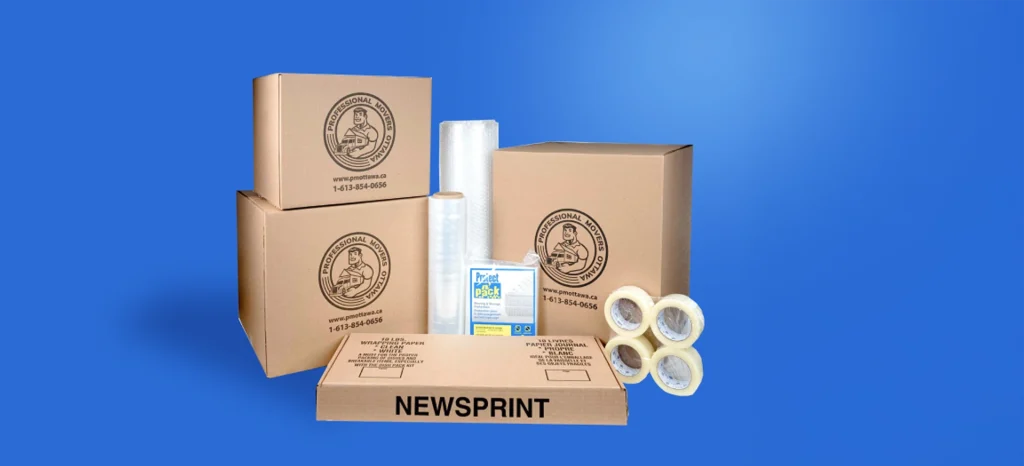
Getting the right packing supplies is key for a smooth move. It starts with purchasing quality materials.
It is important to invest in strong, reliable boxes to keep your things safe.
Begin by collecting various sizes of moving boxes. Different sizes hold different items and help pack things well.
Use smaller boxes for heavy items to make handling easier.
Secure your items with strong packing tape. The strength of your seals is crucial in keeping boxes closed during transit. Use enough tape because quality is important.
Protective packing materials help cushion your possessions. Consider the following essentials:
- Bubble wrap for wrapping fragile items.
- Packing paper for non-abrasive coverage.
- Foam peanuts to fill empty spaces.
- Stretch wrap to secure furniture.
Labels and markers are vital for organization. They help you quickly identify boxes and their contents. Using color-coded labels can further streamline the process.
Having these packing supplies on hand will prepare you for any item, big or small. It keeps the stress of packing at bay. Being well-prepared makes the moving experience smoother and more efficient.
Ensure you have your supplies ready before the packing begins. This foresight will save you time and reduce potential frustration.
Choosing the Best Moving Boxes for Each Item
Selecting the right moving boxes is crucial for the safety of your belongings.
Choosing the right box for your items helps keep them safe during your move. Here’s how to make the best choices.
Start with a variety of box sizes. Standard moving boxes are versatile and work for most items. However, specialty boxes are important for specific needs. Always choose high-quality boxes to keep your items safe.
Consider using dish packing boxes for your kitchenware. These boxes have reinforced dividers that protect fragile plates and bowls. They’re designed to withstand the weight and movement during transit.
For delicate glassware, glass packing boxes are ideal. They provide extra support and are often equipped with padding. This is important to stop damage and save money on replacements.
For a comprehensive packing strategy, keep these options in mind:
Small boxes: Books, utensils, canned goods.
Medium boxes: Linens, small appliances, toys.
Large boxes: Pillows, larger light items, blankets.
Dish packing boxes: Plates, bowls, fragile kitchen items.
Glass packing boxes: Cups, vases, fine china.
Choosing the right box for each item simplifies unpacking. It also ensures that everything arrives intact. Tailor your box choices to your belongings for a smoother move and greater peace of mind. Remember, the perfect box makes all the difference.
Packing Tips for Fragile Items: Dish and Glass Packing Boxes
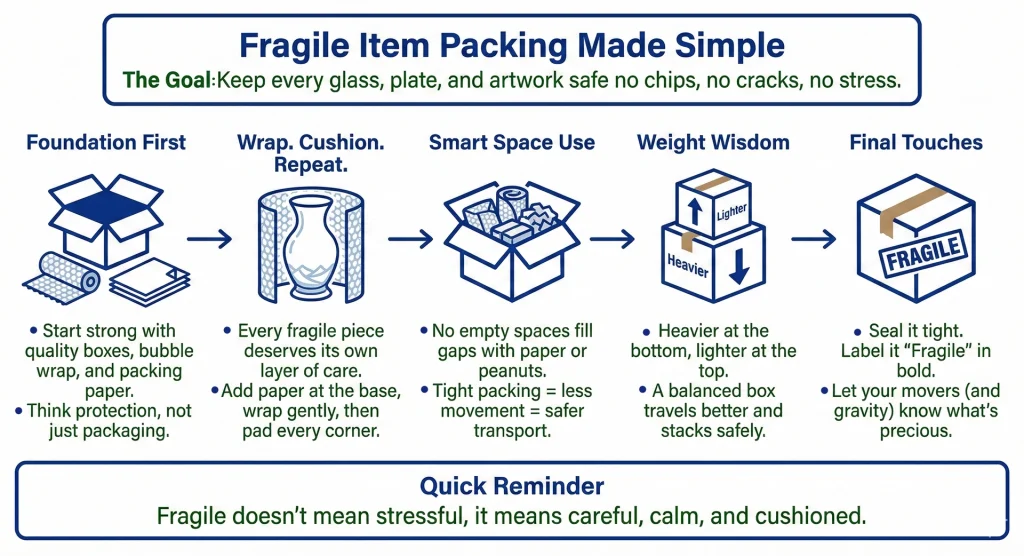
You need to be careful when packing breakables. Packing your valuable dishes and glassware carefully lowers the chances of them breaking.
Here are some crucial tips to get it right.
First, gather packing materials designed for delicate items. Use bubble wrap, foam peanuts, and sturdy dish packing boxes. These supplies keep your fragile items safe while moving.
Individually wrap each item using packing paper or bubble wrap. Place a layer of bubble wrap inside the dish packing box for added protection. Double-check that each item is secure and snug.
Glass packing boxes are your friend for delicate glassware. Pack heavier items at the bottom and lighter ones on top. Fill gaps with packing paper or foam peanuts to prevent shifting.
For additional safety, pay attention to how boxes are sealed. Use strong packing tape to securely close the tops and bottoms of all boxes. Reinforced tape ensures boxes remain intact throughout the move.
Quick tips for packing fragile items:
- Wrap each item separately to avoid contact.
- Label boxes with “FRAGILE” in bold letters.
- Add a fragile arrow symbol for handling instructions.
- Test the weight to avoid making boxes too heavy to lift safely.
- Pack like items together to streamline the unpacking process.
With careful preparation, your fragile items will arrive safely. This peace of mind makes the move smoother and less stressful. Remember, secure packaging is key to protecting your belongings.
How to Pack Boxes Efficiently and Safely
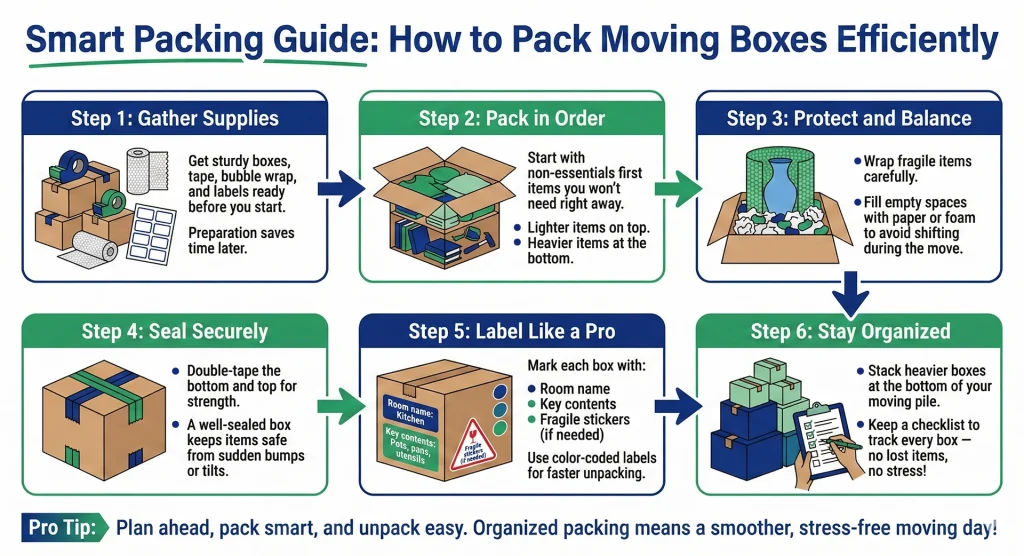
Efficient packing requires both strategy and skill. Begin by organizing your packing supplies. Ensure you have enough boxes, tape, markers, and cushioning materials.
The choice of boxes matters. Use smaller boxes for heavier items like books. This prevents boxes from becoming too heavy and difficult to manage.
A key technique is to evenly distribute weight. Avoid filling a box with only heavy or only light items. Mix them for balanced weight distribution.
Utilize all available space within each box. Tightly pack items to prevent movement during transit. Insert packing paper or towels into any gaps to stabilize the contents.
Sealing your boxes properly ensures they remain closed. Use packing tape to run along all box seams. Reinforce the bottom and top flaps for added security.
Consider these best practices for safety:
- Avoid stacking boxes too high, which may lead to toppling.
- Keep walkways clear while packing to reduce hazards.
- Use lifting aids like dollies for heavy boxes.
Efficient Packing Hacks
- Label boxes not just with contents but also room destinations.
- Use color-coded stickers for quick identification.
- Create a “first unpack” box with essential items for immediate use.
Safety Measures
- Clear the area of obstacles before lifting.
- Bend your knees, not your back, when carrying boxes.
- Use straps or ropes to secure boxes during transit.
A well-thought-out packing strategy keeps belongings safe and ensures a smoother move.
Please take your time to use these tips for a smooth and easy move. When you focus on being efficient and safe, you set yourself up for a good move to your new home.
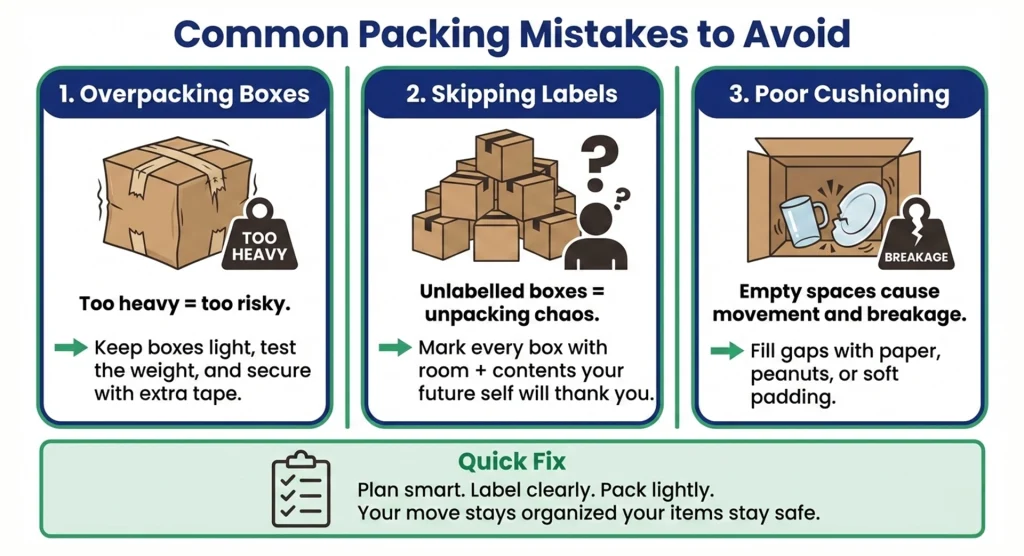
Labeling, Organizing, and Inventory Management
Effective organization eases the unpacking process. Begin by labeling every box clearly. Include both contents and their respective rooms.
A systematic approach to labeling can save time. Use a consistent labeling system. Consider numbering boxes and keeping a master list.
Creating a detailed inventory is crucial. Track all items to ensure nothing is overlooked. This list helps verify that everything arrives at the new location.
For added clarity, use color codes. Assign specific colors to different rooms. This visual cue aids movers and speeds up the unpacking process.
Quick Tips for Effective Organization
- Use clear labels to specify ‘fragile’ or ‘heavy’ items.
- Create an inventory list in a notebook or digital format.
- Color-coded markers can indicate different rooms.
These strategies help make things easier and reduce stress. They also offer peace of mind since you know where each item belongs. Use these methods to help you move to your new place more easily.
Special Packing Tips for Different Room
Packing each room efficiently requires specific strategies. Kitchens, bedrooms, and living rooms all have unique items. Tailor your approach to suit the contents of each space.
Kitchen Packing Strategies
The kitchen contains many fragile items. Dish packing boxes are ideal here. For glassware and china, use plenty of padding.
- Wrap each dish separately using bubble wrap or packing paper.
- Use dividers for glasses and mugs to prevent contact.
- Seal bottles tightly and pack upright to avoid leaks.
Bedroom and Closet Considerations
Wardrobe boxes make clothing transport simple. These boxes keep garments wrinkle-free. For smaller items like shoes and accessories, use shoeboxes or tote bags.
- Pack off-season clothing in vacuum-sealed bags to save space.
- Place jewelry in small containers or pill organizers.
- Bundle linens and towels to act as padding for fragile items.
Managing the Living Room and Decor
Living rooms often have electronics and decor. Protect them with appropriate packing materials. Utilize original boxes for TVs and electronics, if available.
- Wrap cords separately and label for easy setup.
- Use corner protectors for framed art and mirrors.
- Group small decor pieces together with cushioning to prevent shifting.
By using these specific methods, you make sure each room is packed carefully. This way makes unpacking simpler and less likely to cause damage.
It helps with a smoother move.
Loading and Transporting Your Packed Boxes
Loading your moving boxes requires careful planning. It’s essential to organize them efficiently in the truck. This ensures a smooth and safe transport.
Begin by loading the heaviest boxes first. Place them at the bottom to create a stable base. This helps prevent shifting during transit.
Fragile items need extra protection. Keep glass packing boxes and dish packing boxes on top of heavier items. Add cushioning around them to absorb any bumps.
- Distribute weight evenly to maintain truck balance.
- Secure all items with straps or ropes to avoid movement.
- Fill gaps with soft items like pillows or towels for added support.
Ensure that essentials and frequently needed items are easily accessible. Pack them toward the front of the truck. This way, you can unload them first upon arrival.
By following these tips, you optimize the space in the moving truck. It reduces the chance of damaging your things and helps make your move safer and more organized.
Unpacking and Setting Up in Your New Home
Unpacking can feel overwhelming at first. Start by focusing on high-priority areas like the kitchen and bedrooms. These spaces are essential for your day-to-day living.
Designate a specific spot for each box as you unload. This keeps things organized and makes unpacking easier. It helps in avoiding chaos in your new home.
Begin with the essentials box you packed earlier. It contains items you’ll need immediately, such as toiletries, basic kitchenware, and towels. This box is your lifeline for the first few days.
When unpacking, try a room-by-room approach. Tackle one area at a time to avoid distractions.
- Unpack bedding to ensure you have a comfortable place to rest.
- Organize kitchen items so you can cook and eat without hassle.
- Set up furniture to create a functional living space.
Remember to recycle or dispose of packing materials responsibly. This helps in reducing waste and keeping your new space clutter-free. As you settle in, your new house will gradually become home.
Eco-Friendly Packing and Reducing Waste
Moving gives a chance to use eco-friendly methods. Start by using recycled or reusable packing materials. This not only helps the environment but also cuts down on costs.
Consider borrowing or renting moving boxes instead of buying new ones. Many companies offer these services for a fair price.
You’ll be reducing waste and conserving resources.
Use what you already have to pack belongings. Items like towels, linens, and clothing can double as padding for fragile goods. This lowers the need for more materials and keeps your things safe.
Here are some eco-friendly packing tips:
- Use recycled boxes from local stores.
- Opt for Breaks down naturally packing peanuts instead of styrofoam.
- Donate unwanted items rather than discarding them.
After your move, be mindful of how you handle packing materials. Recycle cardboard boxes and plastic materials the right way.
Think about giving useful supplies to friends or family who are moving. Embracing eco-friendly methods benefits the planet and your wallet.
Final Moving Day Checklist and Essential Packing Tips
As moving day approaches, having a checklist ensures nothing is overlooked. With everything organized, the process will be smoother and less stressful. Begin by listing essential tasks to complete before, during, and after your move.
First, make sure all boxes are securely sealed and labeled correctly. This helps to manage things well and reduces confusion when you get to your new home.
Double-check that fragile boxes are labeled clearly.
Here are key tasks to include in your moving day checklist:
- Confirm moving arrangements with the company.
- Pack an overnight bag with essentials for immediate needs.
- Make sure to schedule utility services at your new address.
Now, focus on the actual move. Use a dolly or hand truck for heavy boxes to prevent injuries. Keep walkways clear to avoid accidents. Always lift with your legs, not your back.
For efficient packing, remember these tips:
- Place heavier items at the bottom of boxes.
- Use padding between fragile items to avoid damage.
- Stack the boxes carefully so they stay steady while being moved.
Finally, do a walk-through of your old home to ensure nothing is left behind. Once settled in your new space, take time to relax and enjoy your new surroundings. Moving can be demanding, but thorough preparation ensures it goes smoothly.
Testimonials

Hardworking, focussed and polite. What surprised me was their care and attention detail, almost as if they were moving their own possessions. Thank you for your incredible service.
Contact Us

How It Works
Quality services and
the highest level of professionalism

Contact our team
Reach out to Professional Movers Ottawa via phone or e-mail


Get a free estimate
Consult with our agents on additional services you may need


Organize your move with ease
Let us guide you through a smooth moving process
