

Get Your Free Estimate Now
"*" indicates required fields


Is It Worth Moving to Ottawa?
Relocating isn’t just about packing boxes. It is about understanding the cost of living, lifestyle trade-offs, and neighbourhood fit. For many newcomers, Ottawa offers an affordable alternative to big cities like Toronto and Vancouver. Best of all, you don’t have to sacrifice career opportunities or quality of life.
The city is known for a strong job market, excellent schools, and abundant green spaces. These features make it especially appealing for families and long-term residents.
That said, you should be prepared for a few realities. This includes cold winters, rising housing costs, and a quieter nightlife compared to larger metros. This guide covers exactly what to know before moving to Ottawa. We break down the costs, lifestyle factors, and practical tips. This will help you decide if relocating to Ottawa in 2026 aligns with your priorities.
Is Ottawa, Canada, a Good Place to Live in 2026?
If you’re asking, “Is Ottawa a nice place to live?” The answer in 2026 is yes, if you value stability, livability, and long-term quality of life over big-city hustle.
Ottawa consistently ranks among Canada’s most livable cities thanks to job security, clean neighbourhoods, strong public infrastructure, and family-friendly communities.
Like any city, it comes with trade-offs worth knowing before moving.
Ottawa has seen faster population growth than the Ontario average since the last census.
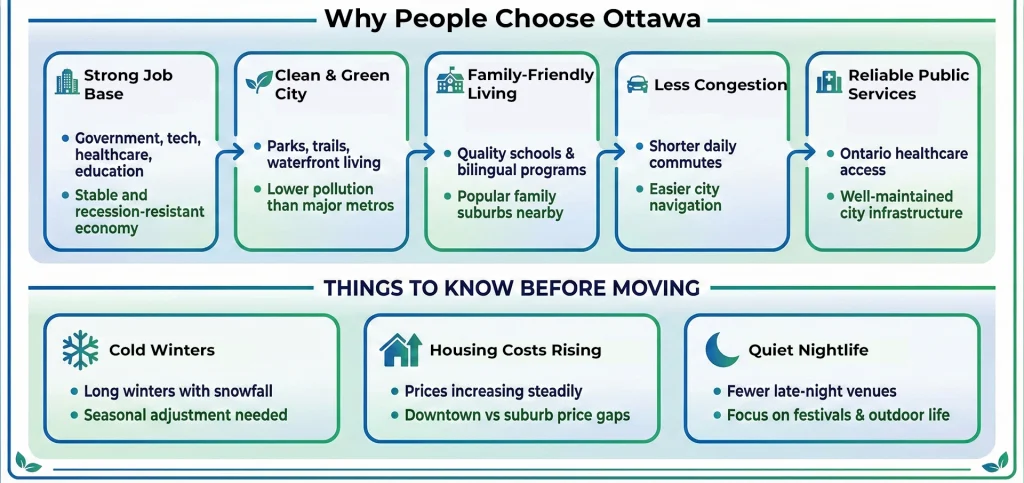
Ottawa in 2026 is ideal for professionals, families, and planners seeking stability, safety, and green space.
It may not satisfy those seeking fast-paced urban energy, but it ranks among the Great White North’s most livable cities.
Cost of Living in Ottawa 2026: What to Expect
Understanding the Cost of living in Ottawa 2026 is key before deciding whether a move makes financial sense.
Below is a clear comparison and overview.
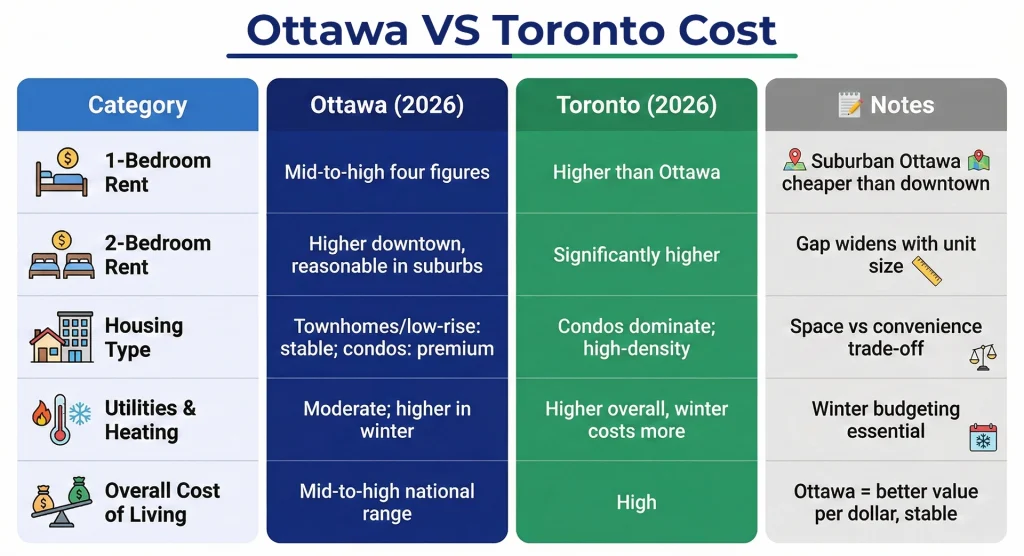
Key Takeaways
- Housing: Largest monthly expense; suburban rentals provide better value than downtown condos.
- Utilities: Seasonal impact is significant; winter costs are higher due to heating.
- Groceries & Essentials: Stable, predictable, and comparable to other mid-sized Canadian cities.
- Transportation: Lower than in Toronto; shorter commutes and less congestion.
- Who Benefits: Dual-income households, government/tech/healthcare professionals, families, and remote workers earning Toronto-level salaries.
Essential Point: Ottawa provides a balanced, financially predictable living environment. Planning for housing and winter utilities is key, but overall, it offers better value per dollar than Toronto while maintaining quality of life.
Is Ottawa Expensive to Live in 2026?
Ottawa is moderately expensive but balanced for the right households.
It’s not a “cheap city,” but it avoids the extreme affordability pressures of Toronto or Vancouver.
In 2026, Ottawa sits in the mid-to-high cost range nationally, with expenses driven mainly by housing and winter utilities rather than lifestyle inflation.
Realistic affordability breakdown
In broad terms, monthly living costs in Ottawa are shaped by:
- Housing and rent (largest expense)
- Utilities and heating (seasonal impact)
- Groceries and essentials (stable, predictable)
- Transportation (lower than in Toronto for most residents)
How Ottawa compares nationally
Compared to other Canadian cities:
- More affordable than Toronto and Vancouver
- Comparable to Calgary in total monthly spend
- Slightly higher than Winnipeg or Halifax
- Less volatile than markets tied heavily to international investment
This stability is one reason Ottawa consistently attracts long-term residents rather than short-term movers.
Who benefits most financially
Ottawa tends to be financially favourable for:
- Dual-income households
- Government, tech, and healthcare professionals
- Families seeking long-term housing stability
- Remote workers earning Toronto-level salaries
For students or single-income renters aiming for downtown living, affordability requires more planning, but it’s still achievable with neighbourhood flexibility.
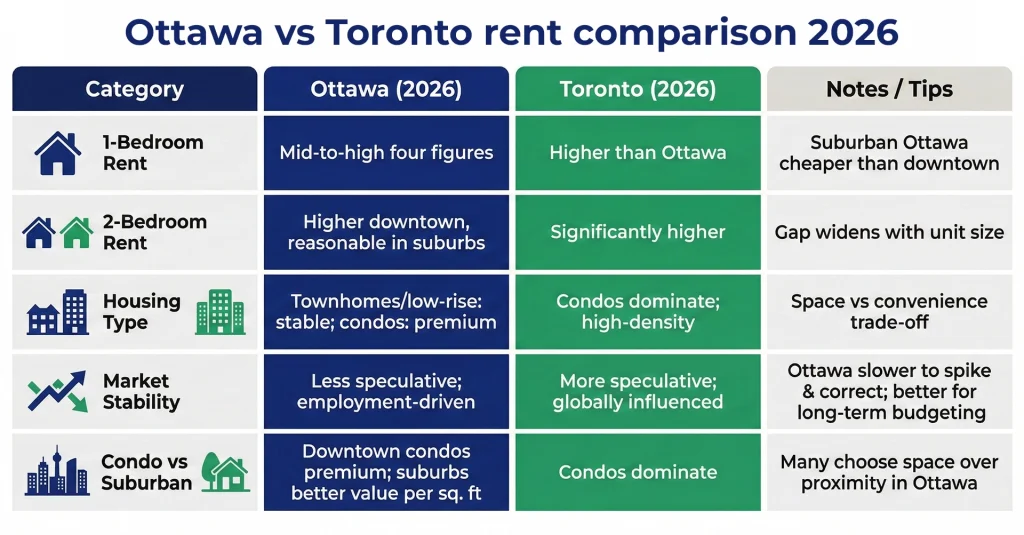
Ottawa vs Toronto Rent Comparison 2026
Renting in Ottawa remains more affordable than in Toronto, especially outside the downtown core.
Key differences in rent, housing types, and stability are summarized below:
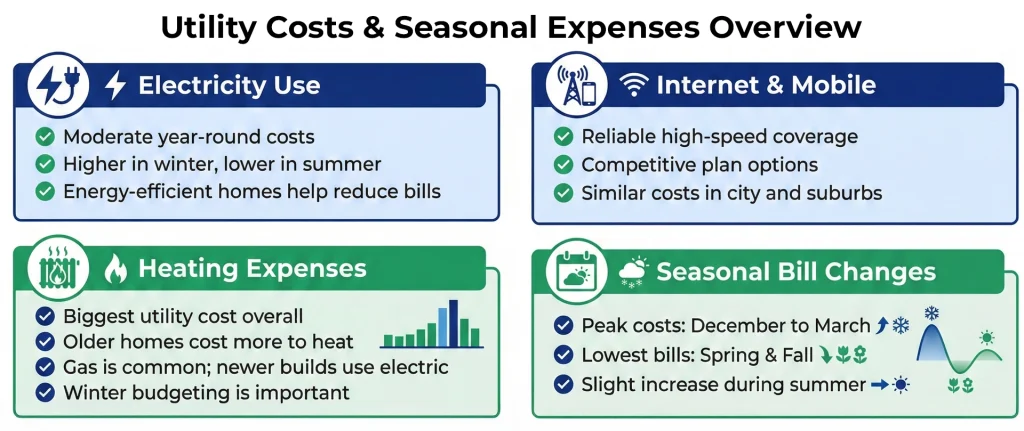
Ottawa Utility Costs Average 2026
Utilities are often underestimated, especially by newcomers from milder climates.
Ottawa’s four-season weather significantly impacts costs.
Moving from Toronto to Ottawa: What Really Changes
For many people considering moving from Toronto to Ottawa, the decision isn’t just about cost; it’s about lifestyle trade-offs.
Toronto and Ottawa offer two very different ways of living, even though they’re only a few hours apart.
Understanding what actually changes after the move helps set realistic expectations and prevents post-relocation regret.
Living in Ottawa vs Toronto (2026)
Cost vs Convenience
- Toronto: Dense transit, endless dining, global connectivity, higher overall costs.
- Ottawa: Better value per dollar in housing, childcare, and daily living.
- Trade-off: Most movers accept slightly reduced convenience for lower financial pressure.
- Summary: Toronto = access & speed; Ottawa = space & stability.
Commute Times
Ottawa:
- Shorter commutes, less congestion.
- Many neighborhoods allow cross-city travel under 30 minutes.
Toronto:
- Longer, less predictable commutes.
- Crowded transit; driving is often inefficient.
Benefit: Reduced Ottawa commuting = better quality of life.
Lifestyle Pace
- Toronto: Fast social, professional, and cultural life.
- Ottawa: Intentional calm; supports routine, balance, and planning.
- Best for: Families and mid-career professionals seeking stability.
Family vs Career Priorities
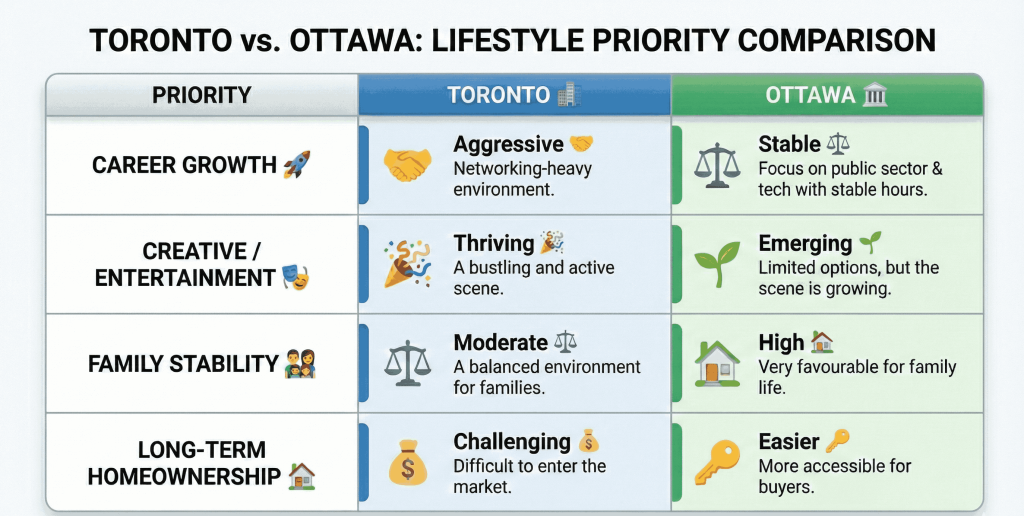
Insight: Moving often signals a lifestyle choice rather than a downgrade.
Key Takeaways
- Ottawa = lower financial pressure, more space, predictable routines.
- Toronto = faster pace, more networking opportunities, denser cultural scene.
- Choosing between the two depends on personal priorities: career vs family, convenience vs stability.
Is Ottawa Boring Compared to Toronto?
Ottawa is quieter than Toronto, with less nightlife and late-night activity.
Culture & festivals: Museums, Tulip Festival, Bluesfest, Winterlude, local food scene.
Outdoor lifestyle: Cycling/walking paths, rivers, parks, green spaces, Gatineau Park access.
Ottawa prioritizes livability, family time, nature, and lower stress over nonstop urban excitement.
For people who value outdoor balance over nightlife density, Ottawa feels energising rather than limiting.
Toronto-to-Ottawa reality check
Moving from Toronto to Ottawa doesn’t mean giving something up; it means choosing differently.
You trade:
- Constant stimulation → daily balance
- High costs → long-term stability
- Crowded routines → livable rhythm
For many households in 2026, that trade-off feels less like a compromise and more like clarity.
Key Takeaway: For anyone asking, “Is it worth moving to Ottawa?” The city rewards planning, flexibility, and long-term thinking.
Best Neighbourhoods in Ottawa for Newcomers
Choosing the right neighbourhood is one of the most important decisions when moving to Ottawa.
The city offers a mix of urban and suburban communities that suit different lifestyles, budgets, and long-term goals.
Best Ottawa Neighbourhoods for Families
Families moving to Ottawa typically prioritise safety, schools, and space.
- Popular family-friendly areas: Kanata, Barrhaven, Orleans
- Known for quieter streets, larger homes, parks, and strong school options
- Well-suited for long-term living and raising children
These suburbs offer better value for space while maintaining access to city services and employment hubs.
Best Neighbourhoods in Ottawa for Professionals
Professionals often look for commute efficiency, walkability, and amenities.
- Urban neighbourhoods closer to downtown and employment centres
- Good access to public transit, cycling routes, restaurants, and cafés
- Mix of condos, townhomes, and rentals
These areas appeal to individuals and couples seeking convenience without the congestion of larger metros.
Best Areas in Ottawa for Retirees
Retirees and downsizers tend to value comfort, access to healthcare, and predictability.
- Neighbourhoods with nearby medical services and daily amenities
- Low-maintenance housing and walkable layouts
- Access to green spaces and recreational paths
Ottawa’s reliable public services and calm pace support long-term retirement living.
Urban vs Suburban Living in Ottawa
- Urban Ottawa: walkable, transit-oriented, more amenities, higher density
- Suburban Ottawa: more space, quieter streets, family-oriented, predictable commutes
Ottawa’s suburbs remain well-connected, allowing newcomers to balance affordability with accessibility.
Key Takeaway: The best neighbourhood in Ottawa depends on your lifestyle priorities. Choose based on whether you prioritize convenience, space, or long-term stability.
Jobs, Schools, and Long-Term Stability in Ottawa
Ottawa offers a stable job market, excellent schools, and a high quality of life, making it ideal for families, professionals, and retirees:
- Employment: Strong opportunities in government, technology, healthcare, and education with predictable hours, hybrid options, and competitive salaries.
- Education & Healthcare: Access to bilingual schools, universities, hospitals, and clinics.
- Long-Term Stability: Safe neighbourhoods, parks, cultural events, and outdoor activities support sustainable living and family growth.
What to Do Before Moving to Ottawa
Once you’ve decided that Ottawa fits your lifestyle and budget, the next step is preparation.
Knowing what to do before moving to Ottawa can save time, reduce costs, and prevent last-minute stress, especially if you’re relocating from another city or province.
1. Planning Your Move Timeline
A well-planned timeline is the foundation of a smooth Ottawa relocation.
Best months to move:
- Late spring to early fall (May–September) offers milder weather and better road conditions.
- Summer moves: Competitive pricing, faster loading/unloading, and easier for families with school schedules.
- Shoulder seasons (April & October): Often lower prices if flexible.
- Winter moves: Possible, but require extra preparation and weather protection.
Seasonal considerations:
- Winter moves: Lower mover demand, potential cost savings, but increased risk of delays; weather-protected packing essential.
- Summer moves: Higher demand and pricing, but smoother logistics.
2. Booking Movers Early
Booking in advance improves pricing, availability, and service quality.
- Local moves: 4–6 weeks in advance.
- Toronto-to-Ottawa moves: 6–8 weeks is safer.
- Early booking avoids last-minute compromises.
3. Hiring Professional Movers
Hiring experienced Professional Movers in Ottawa helps reduce delays, unexpected fees, and damage, especially for long-distance or winter relocations.
Key factors to look for:
- Clear, written estimates (avoid vague ranges).
- Experience with long-distance and intercity moves.
- Crews familiar with Ottawa neighbourhoods, access rules, and winter conditions.
- Transparent policies on delays, cancellations, and rescheduling.
Insurance & licensing basics:
- Proper business registration.
- Cargo insurance for household goods.
- Workers’ compensation for crew members.
- Clear liability terms in writing.
Red flags:
- Large upfront cash deposits.
- Refusal to provide written estimates.
- Unmarked vehicles or a lack of a physical address.
- Pressure to make same-day decisions.
Toronto-to-Ottawa moves:
- Choose movers experienced in intercity moves to reduce delays, unexpected fees, and coordination issues.
- Experienced movers handle highway logistics, timing accuracy, and long-distance insurance coverage.
4. Smart Preparation Pays Off
The earlier you plan, the more control you maintain over timing, budget, and experience.
- Timing of your move
- Budget management
- Move-day experience
Where to Buy Moving Boxes in Ottawa
Finding the right packing supplies is often overlooked but crucial.
Knowing where to buy moving boxes in Ottawa can save money, protect belongings, and streamline your move.
Local Stores & Suppliers
Ottawa offers several reliable options for sourcing moving boxes, depending on your budget, timeline, and packing needs.
Hardware stores
- Standard box sizes, year-round availability
- Easy access to tape, labels, and protective materials
- Best for DIY moves seeking convenience and predictability
Moving supply stores
- Heavy-duty boxes for books, fragile items, wardrobe boxes, and dish packs
- Ideal for long-distance or winter moves where durability matters
Recycling & second-hand options
- Grocery stores, Facebook Marketplace, and local community groups
- Cost-effective but variable in strength and size
- Best for short moves or lightweight items
Professional Movers vs DIY Packing
Cost vs convenience
- DIY packing saves money upfront, but requires time and carries the risk of damage.
- Professional packing costs more but reduces breakage, insurance disputes, and move-day delays.
When professional packing makes sense
- Fragile, valuable, or oversized items
- Long-distance or winter relocations
- Limited time or strict building move-in/out windows
Tip: Choosing the right approach early makes your move smoother and can eliminate the need to source boxes independently by using professional packing services in Ottawa.
Final Verdict: Is It Worth Moving to Ottawa?
Relocating is about more than logistics; it’s about choosing a city that aligns with your lifestyle, career goals, and long-term plans.
So, is it worth moving to Ottawa? For many people in 2026, the answer is yes, provided their priorities align with what the city offers.
Ottawa is ideal for those seeking:
- Families: Safe communities, quality schools, green spaces.
- Professionals: Stable careers, manageable commutes, better work-life balance.
- Retirees & Long-Term Planners: Reliable services, walkable neighbourhoods, slower-paced lifestyle.
- Outdoor & Culture Enthusiasts: Access to Rideau Canal, Gatineau Park, cycling paths, and festivals.
Challenges for some newcomers:
- Nightlife seekers: Quieter compared to Toronto or Montreal.
- Budget-conscious movers: Rising housing costs in popular areas.
- Urban energy seekers: Slower city pace and lower density.
For many, Ottawa isn’t just worth the move; it’s a city built for sustainable living, career growth, and family life.
Final Takeaway: Ottawa rewards movers who prioritize safety, stability, affordability, and quality of life.
Moving to Ottawa: FAQs for New Residents
Is it worth living in Ottawa?
Yes, for affordability, safety, and long-term stability. Ottawa offers lower costs than Toronto or Vancouver, strong employment, excellent schools, and abundant green space.
What salary do you need to live comfortably?
Varies by housing, family size, and lifestyle. Living comfortably usually requires an income above the minimum, but Ottawa remains more affordable than Toronto or Vancouver.
Is moving to Ottawa a good idea?
Yes, if you value job stability, safe neighbourhoods, and a healthy pace of life. Ottawa combines reliable infrastructure, clean communities, and long-term livability.
Testimonials

Hardworking, focussed and polite. What surprised me was their care and attention detail, almost as if they were moving their own possessions. Thank you for your incredible service.
Contact Us

How It Works
Quality services and
the highest level of professionalism

Contact our team
Reach out to Professional Movers Ottawa via phone or e-mail


Get a free estimate
Consult with our agents on additional services you may need


Organize your move with ease
Let us guide you through a smooth moving process
